In what, admittedly, was pure narcissism, I Googled "pickle girl" with the hope that maybe--just maybe--somebody besides Ned reads this blog. I was gobsmacked to learn pickle girl (ahem... the real pickle girl), has an evil twin--one Maury has the chutzpah to call Pickle Girl.
If you want a good laugh, check out what is either heinous acting or an honest-to-goodness phobia of pickles.
Thursday, May 17, 2007
Will the Real pickle girl Please Stand up?


Thursday, May 10, 2007
Pickles in the News: The Electric Kool-Aid Pickle Test

I've decided it's high time pickle girl shared news from the world of pickles beyond the pantry. Yesterday's NY Times article on Kool-Aid dill pickles in towns along the Mississippi Delta inspired me to get on my Mason jar box and say it loud... power to the pickle.
Here's a telling snippet from the article:
But she did eat dill pickles impaled on peppermint sticks, and she remembers how friends sucked the juice from cut lemons through peppermint sticks repurposed as straws. “That’s the same kind of taste,” she said. “Same as how they used to dip pickle spears in dry Kool-Aid mix for that pucker.”
Saturday, May 05, 2007
Ramping up

Pickled ramps seem to be ubiquitous in foodie cirles these days, so it's no surprise these wild, fledgling leeks are easier to find with every passing spring. If you live in NYC, you'll find ramps at your local Greenmarket through May. They can also be found at Whole Foods, Chelsea Produce, and Garden of Eden.
The following recipe for sweet pickled ramps is adapted from Tom Colicchio's Think Like a Chef:
1 pound ramps, cleaned and trimmed
1 cup white wine vinegar
1 cup sugar
1 tsp. mustard seed
1 tsp. coriander seed
1 tsp. fennel seed
1 tsp. red peppercorns
1 bay leaf
1. Combine the vinegar and sugar with 1 cup of water in a saucepan and bring to a boil. Add the mustard, coriander, fennel seeds, peppercorns and bay leaf. Keep warm over low heat.
2. Meanwhile, blanch the ramps in a large pot of boiling salted water until the leaves turn bright green, about 2-3 minutes. Drain, then shock the ramps under cold water. Dry, and arrange in a clean jar.
3. Pour the hot vinegar mixture over the ramps and set aside to cool. Cover and refrigerate for at least 3 days before serving.
Pickled ramps will keep in the refrigerator for several months.
Monday, December 11, 2006
Preserved Meyer Lemons
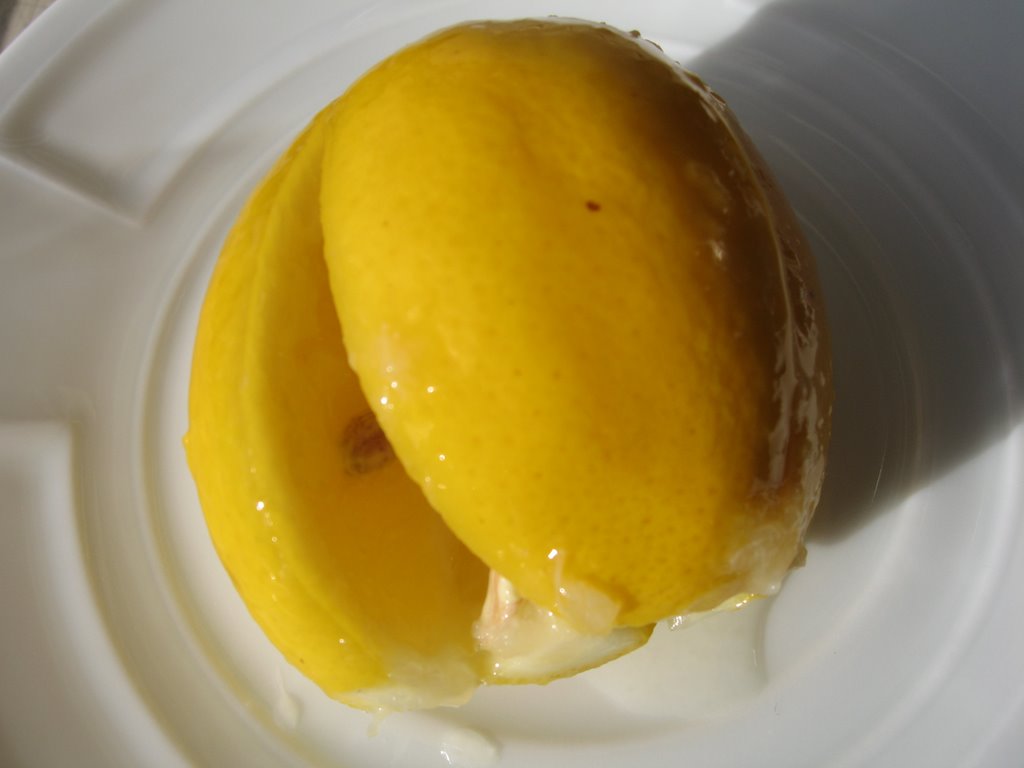
On a recent business trip to San Francisco, I picked up 2 lbs. of California's sweet Meyer lemons at the Ferry Plaza farmers market, so I could preserve them in Mason jars as Christmas presents. Preserved lemons are commonplace throughout the Middle East, and are especially integral to the cuisines of North Africa, where they perfume tagines and add a piquant zing to meze.
When I first started making these years ago, I loved the look of them on my shelves, but only used them once or twice a year. With more daring experimentation, I've come to rely on preserved lemons in my Bloody Marys, a quinoa salad with pine nuts, feta, and mint, and in this no-brainer preserved lemon dip when guests drop by unexpectedly.
1. Use as many lemons as you like--Meyer lemons are preferable, as their skin is thin and somewhat sweet.
2. Cut each lemon 3/4 of the way, horizontally. Now make another cut, perpendicular to the first one, also only cutting 3/4 of the way through the lemon. The fruit should now open like a flower that's held together at the base.
3. Pack the lemons with kosher salt (be sure to fill both cuts), and layer snugly into a clean Mason jar.
4. Cover with freshly squeezed lemon juice and store in the refrigerator.
Preserved lemons will be ready after one month and can be stored for up to one year in the fridge.
Thursday, December 07, 2006
The Dog Ate My Pickle

It seems that I have committed the Cardinal Sin of blogging: it's been months since my last post. However, I have a good excuse, as I've been traveling for work and pleasure since August.
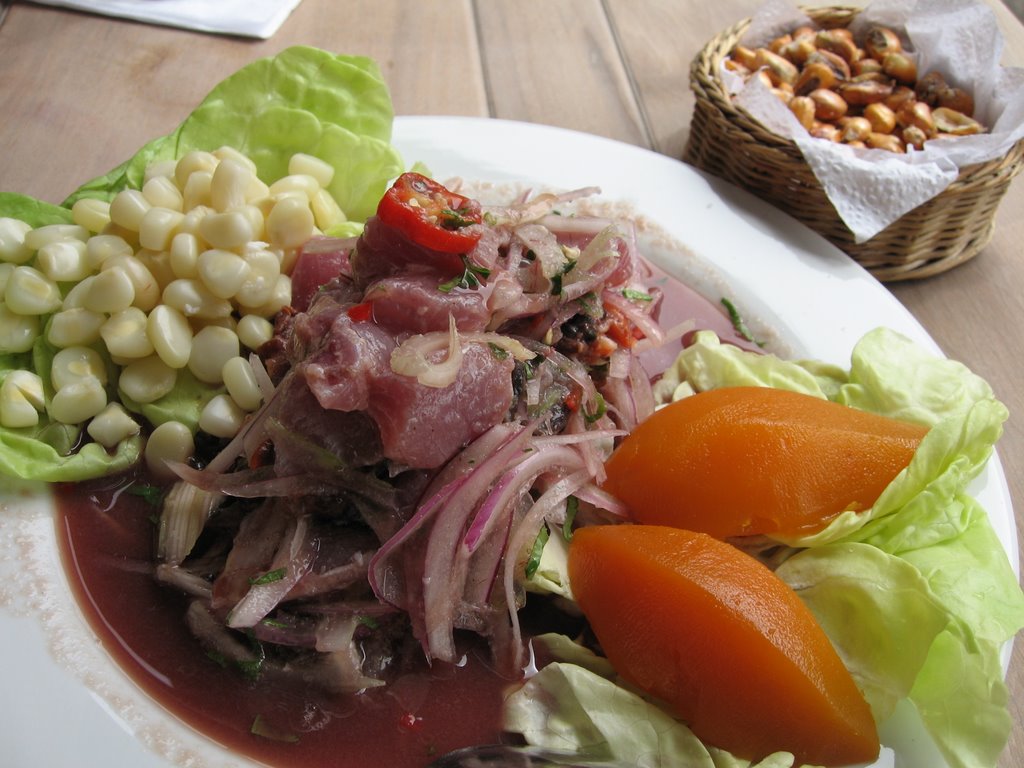
I have returned home to NYC inspired by the pickles and preserved foods I encountered in Peru, Argentina, Chile, Uruguay, and San Francisco. Though not technically a pickle, ceviche is one of the most fascinating cured foods in the world. For starters, it's a pickled protein, not a fruit or vegetable, and it's "cooked" with lemon or lime juice, then mixed with slivers of red onions, enormous Peruvian corn kernels, and slices of sweet potato, which absorb the tangy marinade.
If you're heading to Peru, be sure to spend a few days in Lima--everyone will tell you to skip it, but it's home to some of the best ceviche in the entire country. Nobu Matsuhisa learned to master ceviche and sushi at Toshiro's, where the Japanese-Peruvian fusion is clean and vibrant (try the ceviched scallops on artichoke hearts). Gaston Acurio, gets adventurous with bold combinations, such as the black scallops with yellow pepper sauce, at La Mar, a sophisticated al fresco cevicheria with cement floors, Bossa y Stones tunes, and palm trees. Pescados Capitales, a clever play on the Spanish phrase, pecados capitales--the seven deadly sins--is another urbane spot with impeccably fresh tiraditos and cebiches. Buen provecho!
Friday, August 11, 2006
Au Courant: Pickled Red Currants

The ban on growing black and red currants is officially over! Actually, it’s been over since 1966, but I suppose being out of sight, out of mind for nearly a century makes for a slow resurgence. At $4 per ½ pint in the NYC Greenmarkets, they’re clearly back in vogue.
Cluster branches of vivid berries on a charcuterie board; toss them with a salad of wild greens, toasted hazelnuts, and Maytag blue cheese; or test their gleam alongside a glistening roasted chicken.
1 pint red currants
1 cup dry white wine (I used Lillet because that's what I had in the fridge)
1 cup Champagne vinegar or white vinegar
3/4 cup muscovado sugar or brown sugar
1/4 tsp. black peppercorns
A few allspice berries
1 bay leaf
1. Combine all ingredients except currants and bring to a simmer for 5 minutes.
2. Allow brine to cool, and pour over cleaned currants into a pint jar. Cover and refrigerate.
Yes, it really is that easy. Refrigerated pickles last for one year.
Tuesday, August 08, 2006
A Peck of Pickled Peppers

There’s nothing modern about these heirloom hot peppers, but I had to post them as an ode to our pickle heritage. These garlicky, tangy pickles will be ready just in time for football season’s Bloody Marys, pulled pork sandwiches, and duck confit nachos.
1 lb. hot peppers--any kind you can find (Bulgarian carrot, Bacio di Satana, Serrano, Tabasco, jalapeno, habanero, etc...)
1 Qt. white vinegar
1 cup water
6 Tbs. kosher salt
8 garlic cloves
1 tsp. mustard seeds
1 tsp. Tellicherry peppercorns
3 dill heads
1. Wash peppers and cut an inch-long slit in each one.
2. Simmer vinegar, water, salt, and spices for 5 minutes.
3. Pour hot brine over pickles in a sterilized quart jar. Process for 10 minutes in a hot water canner.
Monday, August 07, 2006
Pickled Scuppernong Muscadines
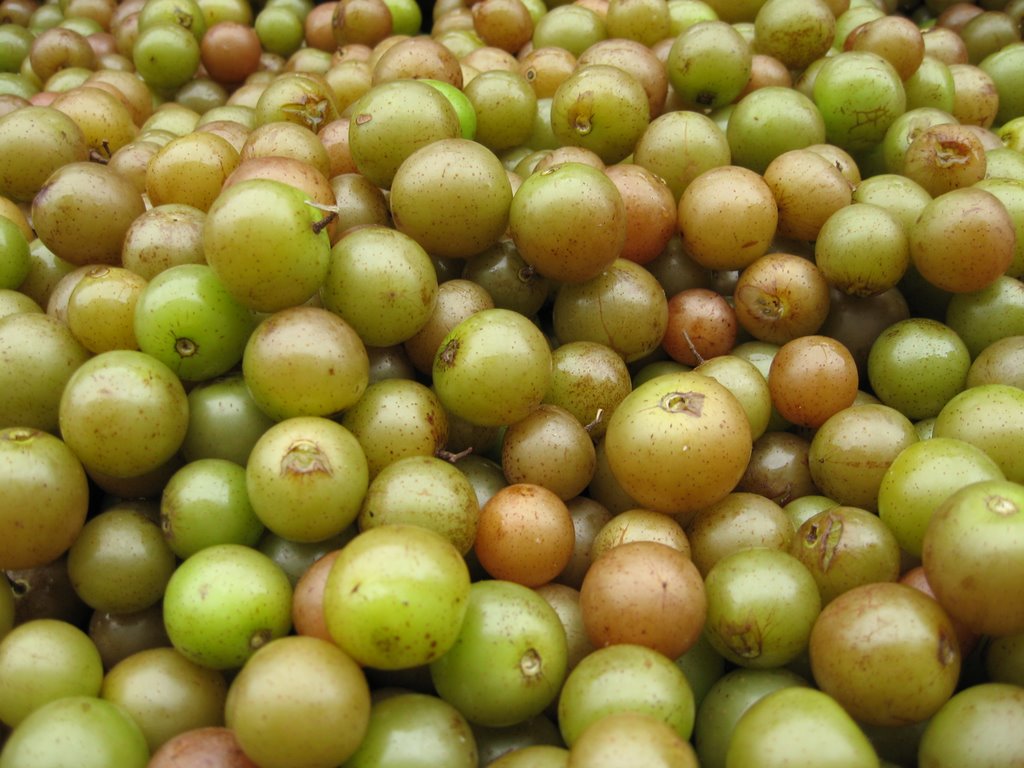
When I came across these oversized, green and bronze grapes in Chinatown (for $2.50/lb.) I thought them to be newfangled plum-grape hybrids from China. Not so: Scuppernong muscadines were first discovered by the early colonists along the Georgia and North Carolina coasts. They've been used to make wine and jams since the 17th century, but today, I'm going to make them pickles.
At a recent James Beard House dinner, chef Joseph Truex (of Georgia's Château Élan Winery & Resort) served these with smoked foie gras roulade with vidalia onion relish and cane sugar gastrique--the inspiration for the sugar cane vinegar, which can be purchased from DeanandDeluca.com.1 lb. Scuppernong muscadines
1 cup sugar cane vinegar (or Champagne vinegar)
1 cup dry white wine
3/4 muscovado sugar (or brown sugar)
8 allspice berries
1 Turkish bay leaf
Simmer all ingredients and stir until the sugar is dissolved. Fill a quart jar with washed muscadines and cover with hot pickling liquid. Allow to cool to room temperature, screw on lid, and refrigerate for at least two weeks (and up to one year).
Wednesday, August 02, 2006
Chef Profile: Peter Hoffman's Preserved Sour Cherries
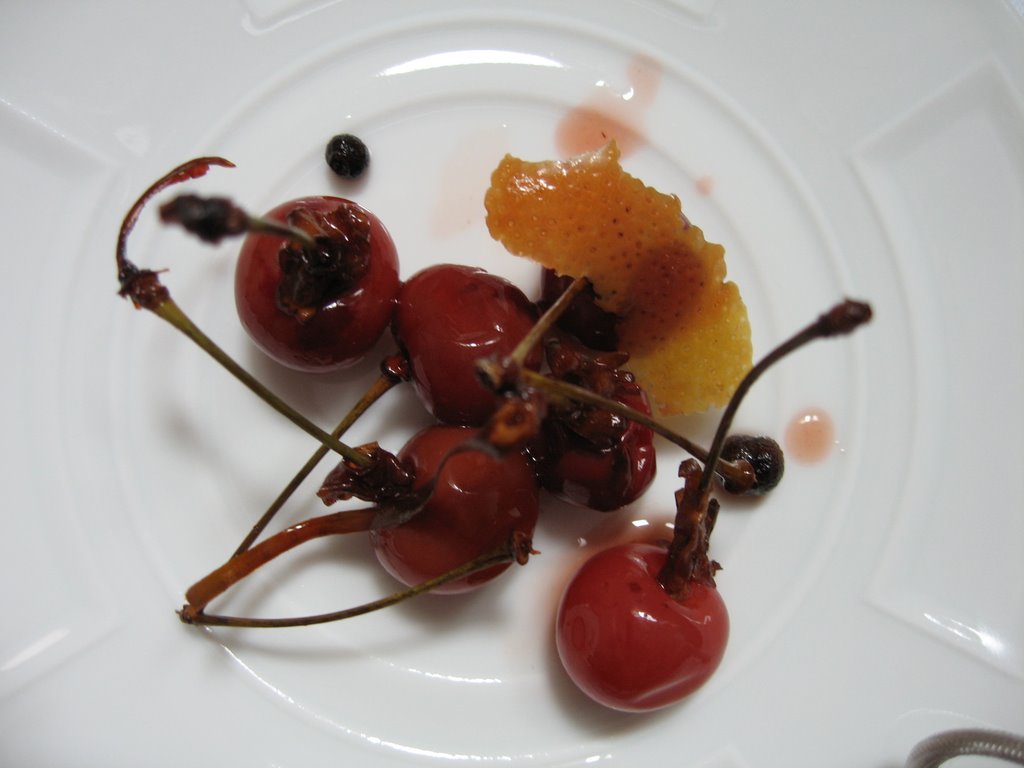
I love to deglaze a pan of seared pork chops with these addictive pickles. Sometimes I stand in front of the fridge and eat them straight from the jar after work. Sour cherries are in season now in the NYC greenmarkets, so go ahead and double the batch to give as gifts during the holidays.
2 cups sugar
2 cups water
1 cup white wine
8 allspice berries
2 tsp. black peppercorns
1/2 cup pomegranate molasses
zest of 1/2 lemon
2 quarts sour cherries (leave the stems on)
1. Combine sugar and water in a medium saucepan over medium heat and boil until slightly thickened--about 5 minutes.
2. Reduce heat and wine, spices, pomegranate molasses, and lemon zest. Simmer for 20 minutes.
3. Add cherries to liquid, turn off heat, and allow mixture to cool. Transfer cherries and their syrup to a container. Refrigerate two weeks before using (keeps for up to 6 months).
Recipe courtesy of Saveur magazine, NO. 31.
Tuesday, August 01, 2006
Tutu's Watermelon Rind Pickles
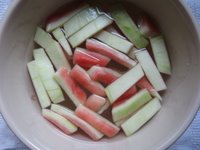
(Recipe adapted from Rowene Erman's family recipe.)
True, these are Southern classics, and this blog is supposed to be about unusual, modern pickles. By updating the recipe and offering atypical serving suggestions, I'm going to let this one slide.
Don't be intimidated by the three-day process; these pickles require minimal effort overall. The spices are merely suggestions--feel free to omit all but the cinnamon and ginger, which really make these pickles sing.
Chef Mark Spangenthal incorporates watermelon rind pickles into a dish of seared foie gras with sauteed peaches. Park Kitchen in Portland, Oregon serves an appetizer of pickled watermelon, roasted beets, and goat cheese, drizzled with good olive oil.
I plan to serve them with crispy, fried pancetta slices and manchego cheese in the fall. Or maybe I'll wrap slices of Oscar's bacon around them and bake like a Spanish tapa until the sugars caramelize the bacon. Spears may even end up in a gin martini or two...
4 lb. watermelon
1 Qt. water
2 Tbs. kosher salt
2 cups cider or Champagne vinegar
2 cups sugar
3-inch piece of ginger, peeled
3 cardamom pods
1 cinnamon stick (use Ceylon if you can find it)
4 whole cloves
1/2 star anise
1/2 nutmeg pod
1/4 tsp. fennel seeds
1/4 tsp. black or pink peppercorns
Day One
1. Cut watermelon into quarters and scoop out flesh, leaving 1/4 inch of red flesh for color. Cut into 2 inch x 1/2 inch batons and peel off green skin with a paring knife or vegetable peeler.
2. Combine water and salt and submerge watermelon batons with a plate and refrigerate overnight.
Day Two
1. Strain rinds and rinse with cold water.
2. Bring vinegar, sugar, spices, and ginger to a boil, stirring to dissolve sugar. Add rinds to syrup and return to a boil. Simmer rinds in syrup for 30 minutes, then allow rinds to steep in syrup, submerged with a plate, in the refrigerator overnight.
Day Three
1. With a slotted spoon, transfer rind to sterilized canning jars (# of jars will depend on how much rind you yield).
2. Bring syrup to a boil, and pour over rinds, leaving 1/2 inch space.
3. Process in a boiler for 10 minutes. Pickles can also be refrigerated for two weeks before eating.
Subscribe to:
Comments (Atom)